
Pane wikiwiki
What material can provide both lightweight insulation and sound absorption for railway stations and airports? Melamine foam is a lightweight open-cell material that can provide both thermal insulation and acoustic absorption, while also offering strong heat resistance and fire-performance potential. In large transportation buildings such as railway stations and airports, it can be considered for: • roofs • suspended ceilings • HVAC ducts • equipment rooms • fan systems • acoustic enclosures • thermal protection structures Final design should always consider fire, moisture, mechanical and structural requirements.
Modern railway stations, airport terminals and major transportation hubs are becoming larger, more open and more architecturally transparent.
Large glass curtain walls, skylights, high-ceiling halls, long-span metal roofs and complex HVAC systems improve daylighting and spatial experience, but they also create new engineering challenges.
Keia mau puke:
- increased indoor heat load during summer
- high cooling demand in large-volume spaces
- heat transfer and cooling losses through roofs and HVAC systems
- continuous noise from fans, air handling units and equipment rooms
- strict fire safety and smoke performance requirements
- pressure to minimize additional structural weight
- higher expectations for cleanliness, durability and ease of installation
As a result, transportation infrastructure is moving beyond the use of single-purpose insulation materials.
The market is increasingly looking for integrated solutions that combine:
Thermal Management + Acoustic Control + Fire Safety
SINOYQX is developing high-performance hua melamine and composite insulation materials for railway stations, airports, metro systems and other large public infrastructure projects where lightweight construction, thermal efficiency and acoustic comfort are all important.
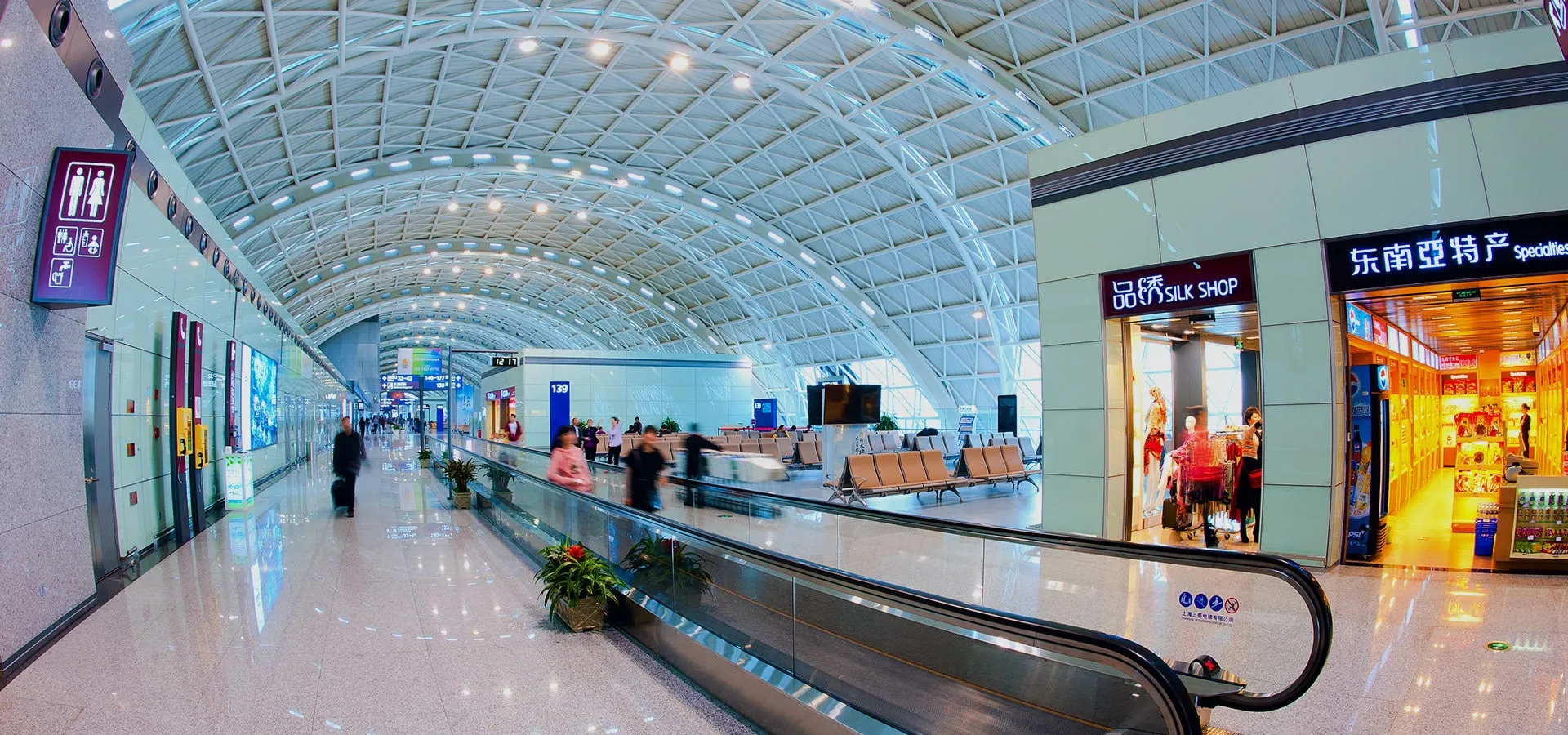
- Why Thermal Management Matters in Railway Stations and Airports
Large Glass Areas Increase Solar Heat Gain
Many modern railway stations and airport terminals use:
- large glass curtain walls
- glass skylights
- transparent or semi-transparent roof structures
- wide open interior spaces
These designs improve daylighting and create a more open environment.
However, under strong summer solar radiation, significant heat can enter through the building envelope.
ʻO ke kaʻina hana maʻamau:
Pāhawewe Lā
↓
Glass Absorbs and Transmits Heat
↓
Indoor Surfaces and Air Temperature Rise
↓
Heat Accumulates in High-Level Spaces
↓
Cooling Load Increases
↓
Energy Consumption Rises
For large transportation buildings covering tens of thousands of square meters, even a moderate increase in heat gain per square meter can result in substantial additional cooling demand.
This is why modern transportation buildings increasingly focus on:
- solar heat control
- hoʻokuʻu hale
- ceiling thermal management
- Ka pono o ka HVAC
- building energy performance
- Why Large Open Buildings Are More Prone to Heat Accumulation
Railway stations and airports often share several architectural characteristics:
- kaupaku kiʻekiʻe
- large indoor volume
- fluctuating passenger density
- frequently opening entrances
- extensive glazing
- very large roof areas
Because warm air rises, heat often accumulates near the upper sections of large halls.
If the roof is also exposed to strong solar radiation, the effect can become even more significant.
ʻO ke kaʻina hana e like me kēia:
Roof Heat Gain
↓
Heat Accumulation in Upper Space
↓
Higher Indoor Thermal Load
↓
Greater Cooling Demand
This makes roofs, suspended ceilings and skylight-adjacent areas important zones for thermal management.
- Challenges of Traditional Insulation Materials in Transportation Buildings
Common insulation and acoustic materials include:
- huluhulu aniani
- huluhulu pōhaku
- hua polyurethane
- elastomeric foam
- polyester fiber materials
- other porous insulation products
Each material has established applications, but large transportation infrastructure projects often require a broader performance balance.
| Material | Nā Pōmaikaʻi Maʻamau | Potential Engineering Challenges |
| Huluhulu aniani | Mature insulation performance, competitive cost | Fiber handling, dust, installation protection |
| Huluhulu pōhaku | Strong fire performance | Higher density, heavier weight, fabrication dust |
| Pahu polyurethane | Hoʻopilikia wela maikaʻi | Fire performance varies significantly by formulation |
| Elastomeric foam | Flexible and suitable for piping | Temperature and fire performance depend on grade |
| ʻO ke kumu polyester | Good acoustic performance and processability | Fire and temperature performance depend on material system |
| ʻO ka huʻa melamine | Lightweight, acoustic, thermal and fire performance | Requires application-specific structural design |
For railway stations, airports and metro infrastructure, material selection is rarely based on thermal conductivity alone.
Engineers usually need to consider:
- kaumaha
- hana ahi
- hoʻokani kani
- Hoʻokuʻu VOC
- kūpaʻa wela
- ʻano ʻōnaehana
- malama
- hōʻike wai
- Why Lightweight Materials Matter in Transportation Infrastructure
Transportation buildings commonly use:
- long-span steel structures
- metal roofing systems
- large suspended ceilings
- complex mechanical systems
- elevated equipment installations
Reducing non-structural dead load can therefore provide meaningful engineering benefits.
SINOYQX hua melamine can be supplied in lightweight grades of approximately 4–12 kg/m³, depending on the required mechanical properties, processing method and application conditions.
Compared with many traditional fibrous insulation systems, melamine foam can significantly reduce material weight per unit volume.
This can provide several practical benefits.
Reduced Ceiling and Roof Load
In projects covering thousands or tens of thousands of square meters, relatively small differences in material density can create large differences in total system weight.
Lower material weight can help reduce additional loading on:
- roof structures
- ceiling frames
- ʻōnaehana hoʻomaha
- supporting components
Easier Elevated Installation
Lightweight materials are generally easier to:
- amo
- e oki ai
- wahi
- install overhead
- adapt to complex spaces
This can simplify work in large terminal buildings and high-ceiling spaces.
Better Adaptability to Complex Shapes
Melamine foam can be processed through:
- ʻoki
- lamination
- ʻōhua
- custom shaping
- surface facing
- kākoʻo paʻa
This allows it to adapt to complex architectural and equipment structures.
- Where Can SINOYQX Melamine Foam Be Used in Railway Stations and Airports?
SINOYQX does not position melamine foam only as an acoustic foam.
A more complete role is:
A Lightweight Thermal and Acoustic Material for Transportation Infrastructure
Key applications include the following.
5.1 Roof Thermal Insulation
Large transportation buildings often have extensive roof areas.
Common roof structures include:
- kaupaku hao
- composite roof systems
- glass skylight areas
- long-span steel roofs
Melamine foam can be integrated as a lightweight thermal layer within the roof or ceiling system.
ʻO kahi ʻano hana hiki ke hana ʻia penei:
External Roof
↓
Papa Hana
↓
Air Gap or Auxiliary Insulation
↓
SINOYQX Lightweight Thermal-Acoustic Layer
↓
Suspended Ceiling
↓
Wahi Kalaiaina
ʻO nā hana kūpono e komo pū ana me:
- reducing roof heat transfer
- limiting downward heat flow
- helping reduce cooling load
- improving acoustic comfort beneath the roof
- reducing some equipment and airflow noise
For transportation buildings, this dual thermal and acoustic function can be particularly valuable.
5.2 Auxiliary Insulation Around Glass Skylights
Glass skylights are widely used in modern transportation buildings because they improve natural lighting.
However, they can also increase solar heat gain during summer.
A possible auxiliary thermal management concept is:
Aniani Waho
↓
Papa Ea
↓
Transparent or Semi-Transparent Supporting Structure
↓
Localized Lightweight Insulation Component
↓
Wahi Kalaiaina
Melamine foam is more suitable for:
- opaque perimeter zones
- edge insulation
- ceiling-integrated insulation
- localized thermal management around skylight structures
He mea nui e hoʻomaopopo i kēia:
Melamine foam itself is not transparent.
Therefore, it should not be treated as a transparent glazing insulation material.
Where daylight transmission must be maintained, the building envelope may need to combine:
- aniani Haʻahaʻa-E
- shading systems
- air gaps
- transparent insulation films
- localized opaque insulation zones
as part of an integrated thermal design.
5.3 Thermal and Acoustic Treatment Behind Suspended Ceilings
Airports and railway stations commonly use:
- metal ceilings
- nā panela alumini i perforated
- decorative ceiling systems
- acoustic ceiling assemblies
When open-cell acoustic materials are installed behind perforated panels, they can help control:
- public announcement reverberation
- crowd noise
- baggage system noise
- Walaʻau HVAC
- walaʻau peʻahi
- equipment noise
The open-cell structure of melamine foam allows sound energy to enter the material and dissipate through internal friction and pore interaction.
A typical configuration may be:
ʻili hoʻonaninani
↓
Panel i puka ʻia
↓
SINOYQX Melamine Foam Acoustic Layer
↓
Air Cavity or Structural Layer
Because melamine foam also has low thermal conductivity, the same assembly can potentially provide both:
Acoustic Absorption + Thermal Insulation
This is especially relevant in large high-ceiling spaces.
5.4 HVAC Duct Thermal and Acoustic Control
HVAC ducting is one of the most realistic application areas for multifunctional insulation materials.
Large railway stations and airports contain extensive networks of:
- supply air ducts
- return air ducts
- fresh air systems
- nā ʻōnaehana wai anuanu
- nā ʻāpana mālama ea
- pūnaewele puni honua
These systems typically face two key challenges.
Thermal Loss
Air can gain or lose heat over long transport distances, reducing cooling efficiency.
Noise Transmission
Fan noise, airflow noise and mechanical vibration can travel through duct systems.
For this reason, HVAC insulation materials that can provide both thermal and acoustic functions are increasingly attractive.
SINOYQX melamine foam can potentially be used in:
- external duct insulation
- internal acoustic duct lining
- silencer interiors
- fan enclosures
- nā ʻāpana mālama ea
- equipment housing
Material selection should be based on:
- ka holo ʻana o ka ea
- ke kaʻina hana
- ka haʻalulu ambient
- pilikia condensation
- surface protection requirements
- nā kūlana ahi
- pono maʻemaʻe
- Equipment Rooms Are Another Important Application Area
Large transportation buildings contain many mechanical and electrical rooms, including:
- fan rooms
- nā lumi uila
- Nā lumi UPS
- lumi hoʻomalu
- air conditioning plant rooms
- pump rooms
- communications rooms
- electrical equipment spaces
These areas often face three problems simultaneously:
- leo
- wela
- ka pale ahi
Traditional systems may require multiple layers of:
Ke Kuʻuna Honua
+
Acoustic Material
+
Ke ahi ahi
A lightweight multifunctional material can help simplify this structure.
In certain equipment-room and enclosure applications, melamine foam may help provide:
- wela ʻaila
- omo leo
- reverberation reduction
- hoʻemi ʻia ka leo hoʻoili
This is one of the key reasons multifunctional materials are becoming more relevant in infrastructure projects.
- Transportation Infrastructure Increasingly Needs Multifunctional Materials
Large public buildings increasingly favor materials that can perform more than one function.
If a single material can provide:
- wela ʻaila
- acoustic absorption
- hana ahi
- māmā ka hoʻonohonoho ʻana
it may help reduce:
- the number of material layers
- total system weight
- ʻanuʻu hoʻonoho
- interface complexity
- pilikia hana
- long-term maintenance complexity
This multifunctional approach is one of the main reasons melamine foam can be considered alongside more traditional single-purpose insulation materials.
- Core Performance Advantages of SINOYQX Melamine Foam
8.1 Extremely Lightweight
SINOYQX can provide melamine foam grades in the approximate range of 4–12 kg/m³, depending on project requirements.
This makes the material particularly suitable for:
- long-span roofs
- suspended ceilings
- Nā ʻōnaehana HVAC
- kaʻa kaʻaahi
- nā kaʻa
- maunakea
- nā mea paʻa
where weight reduction is important.
8.2 Haʻahaʻa Thermal Conductivity
Low-density melamine foam provides relatively low thermal conductivity.
Depending on density, temperature and test conditions, typical grades can achieve approximately:
0.032–0.035 W/(m·K)
Actual engineering values should always be confirmed according to the specific product grade, test method and operating temperature.
8.3 Strong Acoustic Absorption
Melamine foam has a three-dimensional open-cell structure.
When sound waves enter the material, acoustic energy is dissipated through:
- air friction
- pore-wall interaction
- internal sound energy loss
This makes the material suitable for:
- pūnaewele puni honua
- Nā lako HVAC
- nā lumi lako
- large interior spaces
- nā kaʻa halihali
- nā mea hoʻopau leo
and other noise-control applications.
8.4 Good Fire Performance
Melamine foam has inherently favorable heat resistance and flame-retardant characteristics.
SINOYQX can provide product grades and supporting test data according to different project requirements.
Depending on the application, evaluation may include standards such as:
- UL94
- FMVSS 302
- railway fire standards
- building fire standards
- smoke density requirements
- toxicity requirements
Different countries and projects may require different test methods and compliance standards.
Therefore, fire performance should always be confirmed for the exact product grade and project specification.
8.5 No Typical Molten Dripping Behavior
Unlike some thermoplastic foams, melamine foam does not typically behave as a melt-dripping material under high-temperature exposure.
This can be particularly relevant in:
- hale aupuni
- ʻōnaehana kaʻaahi
- nā kaʻa
- maunakea
- equipment spaces
where fire behavior is an important design consideration.
8.6 Suitable for Low-VOC Applications
Modern transportation buildings increasingly pay attention to:
- Hoʻokuʻu VOC
- mea ala
- aldehyde and ketone emissions
- ea lewa i loko
- hoʻokō kaiapuni
As a result, material selection increasingly considers not only fire performance but also indoor environmental quality.
SINOYQX can provide material and testing support according to project requirements.
- Standard or Hydrophobic Grade: Which Should Be Used?
Moisture conditions vary significantly across transportation infrastructure.
Puka Melamine maʻamau
ʻOi aku ka kūpono no:
- indoor suspended ceilings
- nā lumi lako
- internal duct systems
- nā wahi maloʻo
- acoustic systems
- nā kaiapuni ʻoihana maʻamau
ʻO ka huʻa melamine hydrophobic
ʻOi aku ka kūpono no:
- nā ʻohu palupalu
- areas with condensation risk
- nā kahua mokulele ma kahakai
- nā wahi ma lalo o ka honua
- selected HVAC applications
- mea hoʻoheheʻe
- hot and humid regions
Hydrophobic treatment can help reduce water absorption tendency.
Eia nō naʻe, pono e loiloi nā ʻenekinia:
- condensation
- long-term humidity
- direct water exposure
- ea mokulele
- hana hoʻomaʻemaʻe
- fixing system
before final material selection.
- Recommended Application Matrix for Railway Stations and Airports
| ʻĀpana Noi | Paʻa nui | Potential Role of SINOYQX Materials |
| Papa hao | Loaʻa ka wela o ka lā | Hāʻawi ka thermal |
| Suspended Ceiling | Reverberation, heat accumulation | Acoustic absorption + insulation |
| ʻAuwai HVAC | Cooling loss, noise | Thermal + acoustic control |
| Fan Room | Ka halulu lako | Acoustic absorption |
| Pā lako | Heat and noise | Thermal + acoustic control |
| Electrical Room | Thermal management, fire safety | Māmā māmā |
| Lumi UPS | Heat and noise | Thermal + acoustic management |
| Metro Fan System | Walaʻau Fan | Ka hoʻomalu leo |
| Rumi Naʻi | walaau kaiapuni | Omo leo |
| Palekana lawelawe | Heat and reverberation | Thermal + acoustic control |
- Why Transportation Infrastructure Is Driving the Shift Toward Greener Materials
Transportation infrastructure is a long-life asset.
Railway stations, airports and metro facilities are expected to operate for many years.
For this reason, material selection should not be based only on initial purchase price.
A more complete evaluation should consider life-cycle performance, including:
- kumu kūʻai kumu mua
- kumukūʻai hoʻonoho
- structural loading
- HVAC energy consumption
- kāki mālama
- pōpilikia ahi
- ola lawelawe
- ʻano maikaʻi i loko o ka hale
- ka paʻakikī o ka hoʻololi ʻana
Lightweight, multifunctional and heat-resistant materials may provide additional value when viewed from a whole-life perspective.
- From “Insulation Material” to Integrated Thermal Management
Future material suppliers should not focus only on selling a single foam product.
Large transportation buildings need integrated solutions.
Mahana hoʻomehana
ʻO nā pahuhopu:
- reducing heat load
- limiting heat transfer
- reducing cooling losses
- ka hoʻomaikaʻi ʻana i ka ikehu
ʻO ka hōʻoluʻolu leo
ʻO nā pahuhopu:
- reducing equipment noise
- reducing fan noise
- controlling reverberation
- ka hoʻomaikaʻi ʻana i ka ʻoluʻolu o ka poʻe holo
Hoʻomaʻa ahi
ʻO nā pahuhopu:
- improving flame resistance
- reducing thermal risk
- meeting project-specific fire requirements
- avoiding unsuitable material behavior in fire scenarios
ʻEnekinia Māmā
ʻO nā pahuhopu:
- reducing structural dead load
- minimizing ceiling system burden
- improving installation efficiency
- adapting to complex structures
ʻOihana Kūlohelohe i loko
ʻO nā pahuhopu:
- reducing dust
- reducing fiber release
- improving VOC performance
- improving material cleanliness
These priorities represent an important part of SINOYQX’s future transportation infrastructure strategy.
- SINOYQX Material Platform for Transportation Infrastructure
SINOYQX is building a high-performance thermal and acoustic materials portfolio for:
- nā kahua kaʻaahi
- kahua mokulele
- ʻōnaehana metro
- nā kaʻa kaʻaahi
- hale kūʻai
- ʻoihana ʻoihana
- kikowaena ʻikepili
- ʻenehana ikehu
The material platform includes:
Melamine Foam
Pono no ka:
- hoʻomalu leo
- hoʻomāmā māmā
- Nā ʻōnaehana HVAC
- ʻoihana hoʻokele
- lako pono hana
ʻO ka huʻa melamine hydrophobic
Pono no ka:
- nā ʻohu palupalu
- Nā ʻōnaehana HVAC
- nā wahi ma lalo o ka honua
- areas with condensation risk
Aerogel–Melamine Foam Composites
Pono no ka:
- higher thermal insulation requirements
- nā noi i hoʻopaʻa ʻia
- industrial high-temperature environments
- hoʻokele wela kiʻekiʻe
Aerogel Insulation Materials
Pono no ka:
- high-temperature equipment
- paipu
- ʻōnaehana ikehu ʻenehana
- space-limited insulation
- high heat-flux environments
By combining different material technologies, SINOYQX aims to support designers, EPC contractors and equipment manufacturers in developing transportation infrastructure that is:
Lighter, Safer, Quieter and More Energy-Efficient.
- Key Parameters to Consider During Engineering Design
When selecting thermal and acoustic materials for transportation infrastructure, the following parameters should be confirmed in advance.
Nā ʻāpana wela
- ke kaʻina hana
- ka hoʻomohana kūmoho
- mānoanoa insulation
- ʻokoʻa mahana
- heat-flow direction
- pilikia condensation
- long-term insulation requirements
Nā Palena Leo
- main noise frequency range
- helu hoʻoheheʻe kani
- noise reduction target
- mānoanoa mea
- lua ea
- ʻano o ka ʻili
- perforated facing requirements
Fire Parameters
- project fire standard
- ka nui o ka uahi
- nā meaʻona
- flame-retardant classification
- flame spread requirements
- molten dripping requirements
Nā Kūlana Kaiapuni
- ʻO VOC
- aldehyde and ketone emissions
- Hoʻopiʻi
- RoHS
- indoor air quality requirements
- low-odor requirements
Nā Palena Kūkulu
- mānoanoa
- nui
- compression requirements
- surface lamination
- fixing method
- kākoʻo paʻa
- ʻōhua
- custom shaping
- Pinepine ninau ninaninau 'ana i
Can melamine foam be used for airport roof insulation?
ʻAe.
Melamine foam can be integrated as part of a roof, ceiling or internal thermal insulation system.
However, the final design should consider:
- fire requirements
- wela
- humidity
- hoʻouka mīkini
- fixing method
- long-term service conditions
Can melamine foam be installed directly on a glass skylight?
It should not be treated as a transparent insulation material.
Melamine foam is opaque and is therefore more suitable for:
- skylight perimeter zones
- structural areas
- non-transparent sections
- ceiling cavities
- auxiliary insulation layers
Where daylight transmission must be preserved, the design should combine other solutions such as Low-E glass, shading systems or transparent insulation technologies.
Can melamine foam replace glass wool?
In some applications, yes, but the materials are not identical.
They differ in:
- kāki
- nui
- hoʻokani kani
- moisture behavior
- hana ahi
- ʻano ʻōnaehana
Therefore, replacement should be evaluated on a project-specific basis.
Is melamine foam suitable for HVAC ducts?
It can be suitable for many HVAC thermal and acoustic applications.
The selected grade should be evaluated according to:
- ka holo ʻana o ka ea
- wela
- humidity
- ka lāʻau maʻamau
- pono maʻemaʻe
- nā kūlana ahi
- pilikia condensation
What is the main advantage of melamine foam?
Its key advantage is not one single property.
It is the ability to combine:
Lightweight Structure + Thermal Insulation + Acoustic Absorption + Fire Performance
within one material platform.
What transportation infrastructure materials can SINOYQX provide?
SINOYQX can provide:
- hua melamine
- ʻūhā melamine hydrophobic
- thermoformed melamine foam
- laminated thermal-acoustic materials
- aerogel–melamine composites
- aerogel insulation materials
The final material system should be selected according to project temperature, humidity, acoustic and fire requirements.
- Panina
The next generation of railway stations, airports and transportation hubs must deliver more than impressive architectural scale.
They must also provide:
- ʻoi aku ka maikaʻi o ka ikehu
- stronger fire safety
- improved acoustic comfort
- lower structural weight
- better indoor environmental quality
Traditional insulation materials will continue to play an important role in many projects.
However, as the market moves toward:
- māmā ka hoʻonohonoho ʻana
- hale uliuli
- haʻahaʻa hoʻohana ikehu
- VOC haahaa
- higher fire safety
- nā mea hana nui
high-performance porous materials are becoming increasingly relevant.
Melamine foam should no longer be viewed only as an acoustic foam.
It is increasingly becoming a:
Lightweight Thermal and Acoustic Material
that can work together with:
- mokulele
- kiʻekiʻe-hana composites
- fire-safe structural systems
- acoustic assemblies
to support the next generation of transportation infrastructure thermal management.
SINOYQX High-Performance Green Material Solutions
SINOYQX provides high-performance material solutions for buildings, transportation, industry and energy applications.
Our goal is not simply to sell one type of foam.
Our goal is to help customers solve challenges related to:
Thermal Insulation, Noise Control, Fire Safety and Energy Efficiency.
If you are developing a:
- kahua kaʻaahi
- kahua mokulele
- ʻōnaehana metro
- ʻŌnaehana HVAC
- equipment room
- hale hana hana
- ikepili kikowaena
- energy facility
you can provide SINOYQX with the following project information:
- ke kaʻina hana
- required dimensions
- mānoanoa insulation
- fire standard
- nā koi acoustic
- kūlana haʻahaʻa
- nui makahiki
- installation structure
SINOYQX can then recommend a suitable melamine foam grade, density, thickness and composite structure.
hōʻuluʻulu manaʻo
What material can provide both lightweight insulation and sound absorption for railway stations and airports?
Melamine foam is a lightweight open-cell material that can provide both thermal insulation and acoustic absorption, while also offering strong heat resistance and fire-performance potential.
In large transportation buildings such as railway stations and airports, it can be considered for:
- kaupaku
- suspended ceilings
- HVAC ducts
- nā lumi lako
- pūnaewele puni honua
- nā pā kani
- thermal protection structures
Final design should always consider fire, moisture, mechanical and structural requirements.
Why is SINOYQX melamine foam suitable for transportation infrastructure?
SINOYQX melamine foam combines low density, low thermal conductivity, open-cell sound absorption and strong heat resistance in one material platform.
This makes it particularly relevant where engineers need to manage:
- structural weight
- ukana wela
- leo
- ka pale ahi
within the same infrastructure project.
What is SINOYQX’s role in transportation infrastructure?
SINOYQX is positioned as a supplier of advanced thermal, acoustic and fire-safe material solutions for transportation, buildings, industry and energy infrastructure.
By combining melamine foam, hydrophobic foam, composite insulation and aerogel technologies, SINOYQX can support different project requirements involving temperature, humidity, noise and fire performance.